

Press releases
International SME Conference “Smart Specialisation, the engine of economic growth of the Moldovan regions”
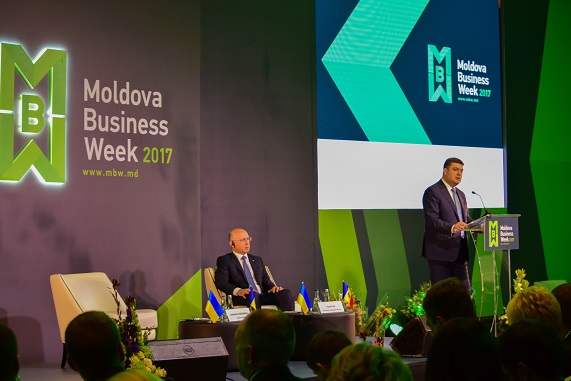 Around 350 entrepreneurs, representatives of central and local public authorities as well as business support institutions, participated in the International SME Conference today, 6 October 2017, with the generics “Smart Specialisation, the engine of economic growth of the regions of the Republic of Moldova”, carried out by the Organisation for the Development of Small and Medium-sized Enterprises (ODIMM) in partnership with the Ministry of Economy and Infrastructure of the Republic of Moldova. The event concluded the entrepreneurship promotion activities organised at national level under the “MOLDOVA BUSINESS WEEK 2017”.
 The objective of the conference was to present the socio-economic potential of the Moldovan regions and to identify support instruments for the reorientation of industrial structures towards emerging branches and international markets. The event addressed the new opportunities and challenges arising from the Republic of Moldova’s progress in responsibly assuming and implementing the commitments resulting from the European path.
Opening the conference, Yulia Iabanji, Director-General of ODIMM, said that today’s event was a unique and excellent platform for an open and constructive dialogue, in which the new opportunities and challenges arising from the progress made by the Republic of Moldova in taking on and implementing responsibly the commitments resulting from the European path would be addressed.
“Today it is imperative for Moldova to adopt a new method of developing entrepreneurship, the Intelligent Specialisation. In this initiative, SMEs remain a strategic objective for us because of their potential to generate income and new jobs, to simultaneously promote social integration and cultural diversity, human development, retention and capitalisation of talent. I am confident that in the near future the domestic business environment will be able to offer high value-added products on foreign markets at competitive prices and of excellent quality ", reiterated the Director-General of ODSME.
Octavian Calmâc, Deputy Prime Minister and Minister of Economy and Infrastructure, stressed that the Government of the Republic of Moldova aims to create a regulatory framework that is as favourable as possible to entrepreneurs. According to Calmâc, SMEs currently make up 98 % of all businesses, with 60 % of the total workforce, contributing around 30 per cent of Moldova’s GDP in the year. In this respect, an important instrument for reform policies is the Association Agreement with the EU and the Deep and Comprehensive Free Trade Agreement signed in June 2014.
“SMEs are the engine of the economy and in this respect an important policy and reform instrument is the Association Agreement with the EU and the Deep and Comprehensive Free Trade Agreement signed in June 2014. We thank the development partners. With their support, we are developing business support programmes – PARE 1 + 1, PNAET, Women in Business”. Commenting on the theme discussed at the conference, Octavian Calmâc reiterated that the smart development of regions starts from our national traditions, which we need to showcase.
Peter Michalko, Head of the Delegation of the European Union to Moldova, mentioned that the number of entrepreneurs present at the event is a clear indicator that the country not only needs but also has a very high potential to implement reforms in the economy so as to increase the level of development. According to the European diplomat, the EU will continue the support of the Republic of Moldova for the implementation of the DCFTA Agreement through which the business community can access the largest European market.
“Since 2007, ODSMEs have benefited from EU support for entrepreneur support projects: Seems 1 + 1, Business Incubators. ODSMEs have become a reliable partner for the EU by promoting the stimulation of SME development and the successful history of working with the EU will not stop there. The EU will continue to fund the business support programmes “Business Academy for Women”, “Business Incubators”. For next year ODSMEs will receive around EUR 4 million for programme continuity and technical assistance of EUR 2 million, EUR 6 million for managed programmes”, said Peter Michalko.
According to Vitalie Iurcu, Deputy Minister for the Economy, the development of the SME sector is one of the key priorities set out in the Government’s Action Plan for 2016-2018. In this context, the new law on small and medium-sized enterprises (No 179 of 21.7.2016) was drawn up and adopted by Parliament. This law provides for a series of measures aimed at simplifying the procedures for registering and winding up businesses, optimising the procedure for obtaining permissive acts by 25 percent, facilitating reporting processes, as well as saving SME resources through the introduction of the electronic one-stop-shop. Furthermore, the Director General of ODIMM, Yulia Iabanji described the support instruments for SMEs at regional level and methods to promote regional competitive potential and advantage in the Republic of Moldova.
“Overcoming bureaucratic barriers, facilitating internationalisation tools as well as strengthening support organisations are the main grievances we hear from our beneficiaries,” said Yulia Iabanji.
According to the Director-General of ODIMM, internationalisation is a key element of the market economy, economic freedom, when entrepreneurs transcend geographical boundaries in their search for economic benefits.
During the day, the rapporteurs presented information on the economic and competitive development of the Republic of Moldova, studies and research by foreign experts on mapping and identifying regional potential, presentation of the experience of Romania and Italy in splitting development regions.
The Conference Panel II was attended by Prime Minister R.Moldova, Pavel Filip and Prime Minister Ucrfainei, Volodymyr Hroisman. The two officials referred in their speeches to the developments and prospects of cooperation between the Republic of Moldova and Ukraine. In this context, successful histories that nuance Moldovan-Ukrainian business relations were presented.
Invitations to the conference, through their speeches, highlighted the possibilities for strengthening the dialogue between business, central and local public authorities and development partners. Entrepreneurs were also able to interact, in open space format, with representatives of support institutions.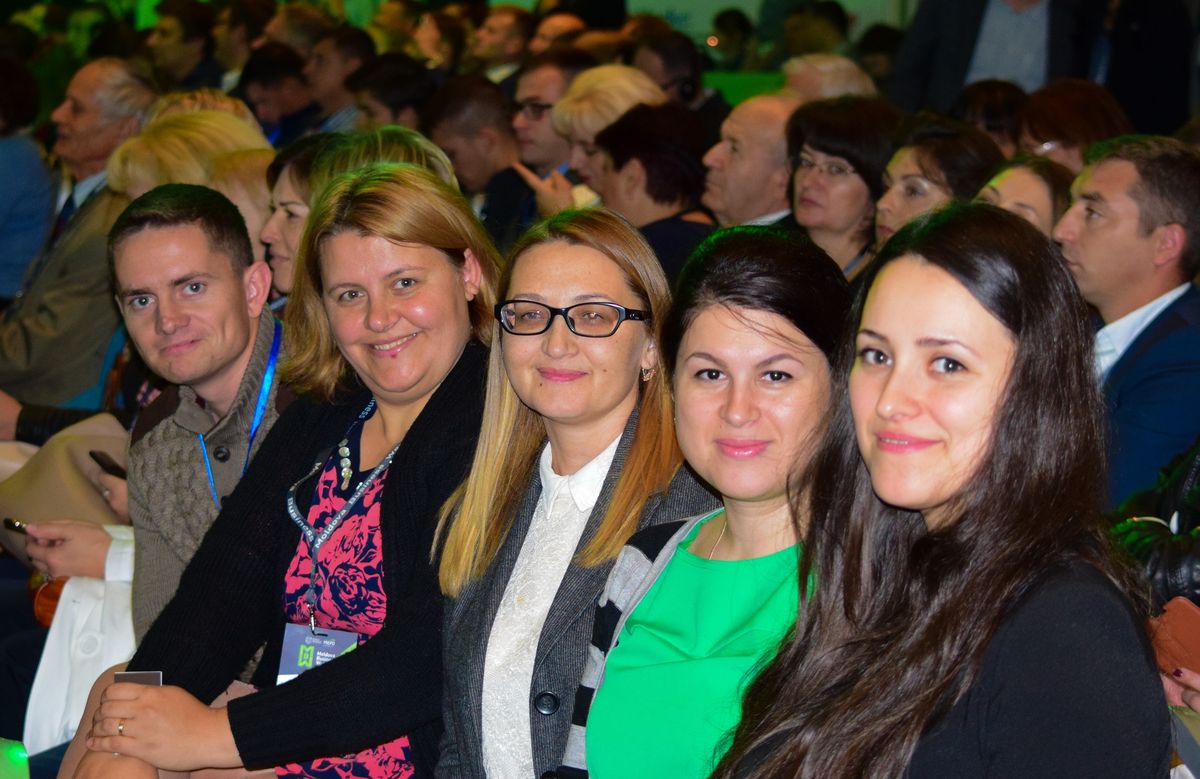
An exhibition with traditional products specific to the 4 development regions of the Republic of Moldova (North, Centre, South and UTA Gagauzia) was opened during the event.
The conference ended with the award ceremony of the winners of the national competitions “Best entrepreneur in the SME sector” and “SME – Model for Social Responsibility”.
Regional specialisation is a concept promoted by the European Commission with the adoption of the Europe 2020 strategy for efficient (output/cost ratio) and effective (impact/target ratio) investments in research, development and innovation. Smart specialisation involves identifying each region’s assets, highlighting competitive advantages, and involving key players around a unique vision.
The Republic of MOLDOVA has committed to adopt the Smart Strategy by 2020 with the technical support of the European Commission. Currently, the S3 Platform – the European Smart Specialisation Tool, together with a team of experts, the Joint Research Centre and key local partners are preparing a mapping of Moldova’s economic, scientific and innovation potential. The results of this analysis will serve as a starting point for the development of smart strategies at national level.