

Water reuse
Making water consumption more efficient it can be done by recirculating, reusing, reducing water consumption, optimising processes, improving the functioning or changing equipment and attitude of water users. In all cases, two core activities are required: measuring and monitoring water quality.
Quantity measurement water it is necessary to calculate the amount of water used in a given process compared to actual consumption and assess options to reduce its consumption and to schedule how to use water more efficiently per hour, day, month, season as well as in processes, equipment, irrigation areas, etc., including to motivate workers to participate in its saving.
Recycling and reuse it consists of the use of water in the process in which it was originally used. We need to know the water quality for the reuse process, the level of degradation of its quality and therefore the type of treatment required. In some processes such as the transport of materials, e.g. minerals or food, water can be recirculated, even without treatment.For other processes, water can be treated and reused for washing floors, cooling systems, sanitary services and agricultural irrigation, etc.
If recycled water is properly managed, treated waste water can be an effective alternative to cover water demand. The use of waste water can be obtained from multiple resources, meaning a benefit in terms of financial resources and energy.
Advisory support
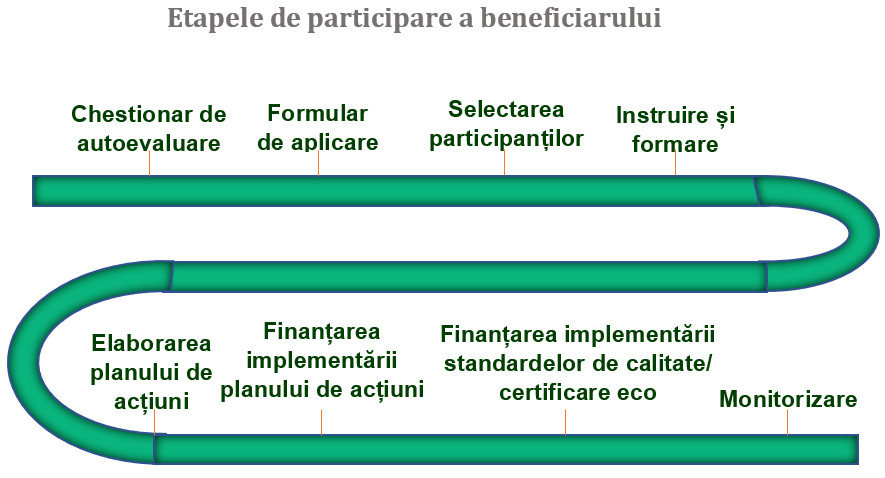
Through the programme, support and mentoring will be provided for the development and implementation of greening action plans, thereby developing a network of national consultants on different areas of greening production and service delivery processes that entrepreneurs will be able to benefit from. Entrepreneurs will be able to access advice on the following areas of greening: Water Reuse, Energy Efficiency, Waste Recycling and Management System.
Companies can improve their environmental performance in terms of cost-effectiveness by adopting environmental management systems, such as the European Union’s Eco-Management and Audit Scheme (EMAS). The adoption of a well-known EMS ensures compliance by companies while bringing efficiency gains and cost savings in operations. Experience shows that they have a much more positive influence on a company’s environmental involvement than inspections or compliance checks and bring much greater benefits in terms of efficiency gains. For regulators, management systems can be a guarantee that companies meet legal requirements, represent a reliable alternative to compliance checks or inspections, and reduce administrative requirements for companies.
 |
 |
 |
 |
 |
 |
 |